
English| EUR
Suggested for you
More currencies
Choose a language
Kosovo has evolved considerably since its 2008 declaration of independence, yet many travelers arriving from Skopje still carry outdated perceptions of risk. Pristina operates as a functioning European capital with low violent crime rates, though localized tensions near the Serbian border require awareness. This guide separates current conditions from legacy assumptions.
Quick answer
Kosovo is safe to travel to for the vast majority of visitors, including day-trippers from North Macedonia. Pristina maintains low rates of violent crime and welcomes tourists without significant incident. The primary caution involves avoiding the immediate border zone with Serbia—particularly the northern municipalities of Mitrovica, Leposavić, and Zvečan—where sporadic political tensions can escalate. Standard urban precautions apply in the capital.
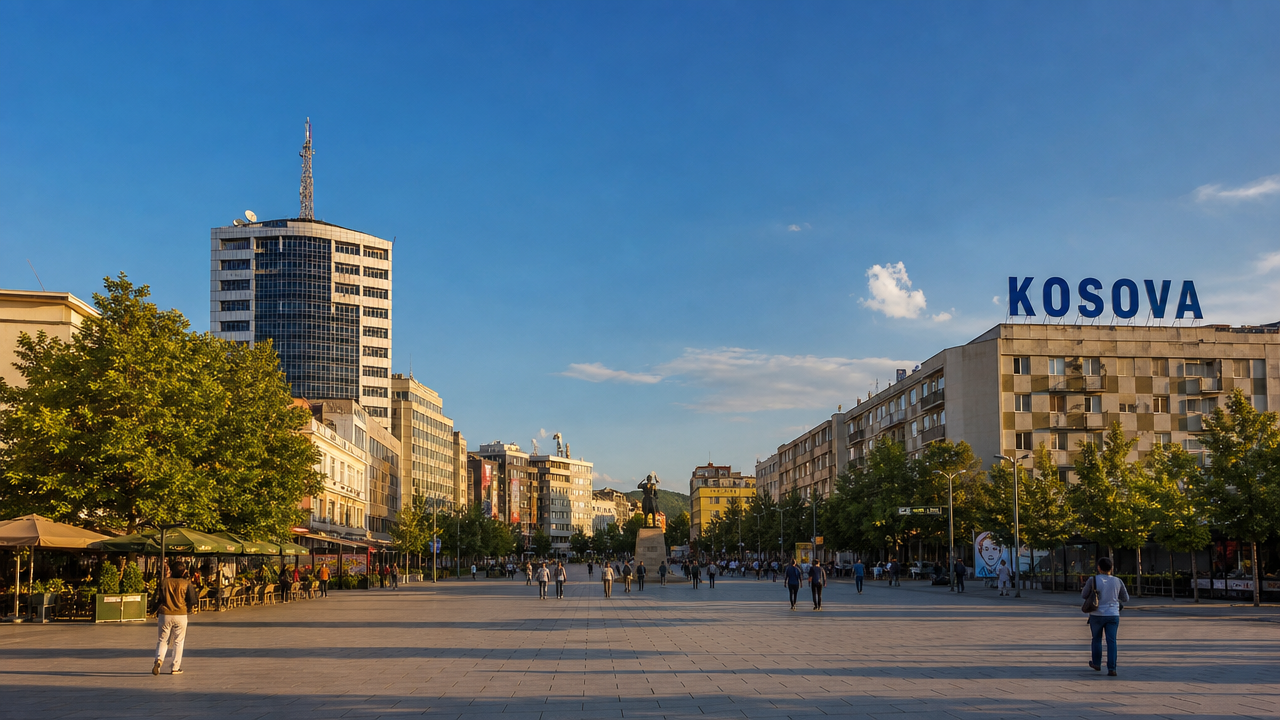
Kosovo registers fewer tourist-targeted crimes per capita than many established European destinations, a fact that surprises first-time visitors conditioned by two-decade-old travel advisories. Pristina's central pedestrian corridor—Bulevardi Nënë Tereza and the surrounding Qendra district—operates with visible police presence and the ambient security typical of a small capital eager to establish its tourism infrastructure. The question of whether visiting Kosovo is safe hinges less on street crime than on geopolitical literacy. The 2023 clashes in northern Mitrovica, which resulted in international peacekeeping deployments, occurred more than 40 kilometers from Pristina and had zero impact on civilian movement within the capital or along the Pristina-Skopje corridor. Day-trippers face no practical exposure to these dynamics. What matters is staying within the central and southern municipalities, where governance is stable and the hospitality sector is accustomed to short-stay visitors. Petty theft exists at the level common to any city of 200,000—unattended bags at café tables represent opportunity, locked car doors do not. Kosovo's safety for travelers also benefits from its demographic youth and the economic pragmatism that comes with it. The median age sits near 30, and the service economy depends heavily on diaspora remittances and the slow-building tourism trade. This produces a visitor experience more collaborative than transactional. English is spoken widely among under-40 residents, directional assistance is offered freely, and the operational assumption is that a positive impression converts to word-of-mouth marketing. That said, traveling to Kosovo requires minor administrative foresight that neighboring EU members do not. Land border crossings from Serbia remain politically contested, and entry stamps from Serbia can complicate onward travel if your itinerary includes return through Serbian-controlled points. The Pristina-Skopje route via Han i Elezit avoids this friction entirely. Mobile connectivity works on roaming agreements with most European carriers. Cash euros remain more reliable than card payments outside the main boulevard. Tap water in Pristina meets potability standards but is sometimes discolored due to aging infrastructure—bottled water costs under one euro. The operational verdict is straightforward: is it safe to travel to Kosovo as a day visitor from Skopje? Yes, with the same situational awareness you would bring to any non-EU capital. Avoid the northern border municipalities, keep valuables secure in crowded spaces, and recognize that this is a young state still calibrating its international image—which currently works in the traveler's favor.
“Kosovo registers fewer tourist-targeted crimes per capita than many established European destinations, a fact that surprises first-time visitors conditioned by two-decade-old travel advisories.”
The safest and most practical time to arrive in Pristina is within the 08:00–20:00 window. This timeframe ensures optimal daylight visibility and full access to local support services.
Mild temperatures, 15°C to 22°C
Pleasant conditions for walking and city exploration.
Cool, stable weather, 12°C to 19°C
Clear days provide better visibility for transit.
—
Arriving between 08:00 and 12:00 allows for easier navigation of urban services.
Verdict: For maximum safety and service accessibility, arrive between 08:00–20:00 during the months of April, May, September, or October.
Traveling from Skopje to Pristina is a routine transit corridor connecting North Macedonia and Kosovo. The most reliable method for visitors is utilizing established bus services or private transport via the E-65 highway.
Skopje Central Bus Station to Pristina Bus Station
E-65 highway via Hani i Elezit border crossing
Direct transfer from Skopje city center
Plan your travel within the best arrival window of 08:00–20:00 to ensure standard border operations and access to tourist services. Ensure your passport and relevant entry documentation are prepared before reaching the border checkpoint to facilitate a smooth transit.
Public sites in Pristina generally operate without entrance charges. Visitors should be aware that official access to these locations remains free of charge to prevent overpayment scams.
Verdict: A typical adult pays 0 EUR for entry, as all public sites in Pristina provide free access to all visitors.
Pristina is welcoming to visitors, and observing local norms helps you navigate the city confidently. Respectful behavior aligns with both cultural expectations and practical safety.
Cross-border travel from North Macedonia requires specific documentation and modest preparation.
Everything you need to know about is it safe to travel to kosovo
Travelers generally find that it is safe to travel to kosovo, as the region experiences low levels of violent crime. Most visitors encounter a welcoming atmosphere while exploring the cultural landmarks and urban centers.
Pristina remains stable, with daily life continuing normally across the capital. Local authorities maintain a visible presence to ensure public order and security for residents and visitors alike.
Public transport and private transit options are reliable, though travelers should use official services. When planning how is it safe to travel to kosovo by road, stick to main routes and verified operators.
Many solo travelers report positive experiences throughout the country due to the hospitable nature of the local population. Exercising standard urban awareness is sufficient to ensure your well-being while navigating city streets.
To ensure your trip is secure, keep your travel documents accessible and use established border crossings. Planning your itinerary in advance is one of the most effective ways to ensure it is safe to travel to kosovo for a short stay.
The recommended arrival window is 08:00–20:00 to ensure optimal access to tourist services and daylight visibility. Arriving during these hours allows for smoother transit through city infrastructure.
There is no cost to access the city, as there is a 0 EUR entrance fee for all visitors. This makes it an accessible destination for those interested in local heritage and architecture.
Yes, the city is open to visitors every day of the week. Access is available from Monday through Sunday, 00:00–23:59, ensuring flexibility for your travel schedule.